
Best 3D Virtual Gallery website for Artists. 2026 review.
OpenVGal
Why This Guide Exists (and why you should trust it)
I’m LB — the creator of OpenVGAL, an open-source 3D virtual gallery builder. I’m also a photographer and generative artist. So yes, I have skin in the game — but that also means I’ve spent years studying user flows, visual quality, and ease of use. I am now comparing it across every competing virtual art gallery platform on the market. In writing this guide I personally tested almost every platform listed below.
My goal isn’t to trash the commercial options — several are genuinely good tools. It’s to give artists the honest, unfiltered picture that no platform’s marketing page will ever give you.
Twenty years ago pbase.com taught me a painful lesson about platform dependency when they disabled my JavaScript tweaks. I migrated to WordPress, gained independence, but inherited a new set of limitations. Four years ago I started building OpenVGAL so that artists could have a permanent 3D virtual gallery they truly own — no landlord, no subscriptions, no surprises.
The questions most artists actually care about aren’t on any feature comparison matrix:
- What happens to my galleries if this company shuts down?
- Do they own a licence to my content?
- Am I renting my gallery or building something that lasts?
This guide answers those questions honestly, for every major 3D virtual gallery platform available in 2026.
The State of Virtual Art Gallery Software in 2026
Most virtual gallery platforms talk about democratising art — but in practice they replicate the same scarcity of physical exhibitions. They are built for temporary exhibitions, not for a permanent portfolio you actually own.
Digital real estate is artificially scarce even on paid plans. Virtual rooms are often tiny; uploading 5–15 artworks is manageable but uploading 300–1,000 is essentially impossible. Almost every SaaS online virtual gallery platform is architected for galleries and curators, not for independent artists with large bodies of work.
The second, deeper problem: none of the commercial solutions give you true ownership. After all the work of uploading, arranging, and customising — if the platform raises prices, gets acquired, or shuts down, you cannot pack up and move. You start from scratch. The recent Foundation.app drama is a cautionary tale every artist should read.
These are the two dimensions where OpenVGAL was designed to excel: it’s a portfolio showcase (not just an exhibition tool), and you own the output completely. At the end of the creation process — which requires no sign-up and no payment — you download a self-contained ZIP and host it anywhere. More than 1,000 images, placed automatically, in a few seconds or minutes.
Over three years, a $100/month SaaS bill becomes $3,600+ for something you don’t even own. OpenVGAL costs exactly $0 if you decide to host it yourself — and $9–19 a month only if you’d rather I host a permanent URL for you. The builder itself is free forever either way.
Platform-by-Platform Review: 3D Virtual Gallery Software
OpenVGAL — Built by an Artist, for Artists Who Want Full Ownership
I make OpenVGAL, so it goes first and you can judge the rest against it. It is the only platform here you can use in full without an account, the only one you can self-host for free, and the only one that is open source (MIT) — which makes it the only option you keep if its maker ever disappears.
It is also the easiest to start with. You drop folders of images into the builder; each folder becomes a room and the artworks are placed automatically. There is no one-by-one upload, no CSV, no manual positioning, and no artwork cap: a 1,000-image portfolio goes in at once.
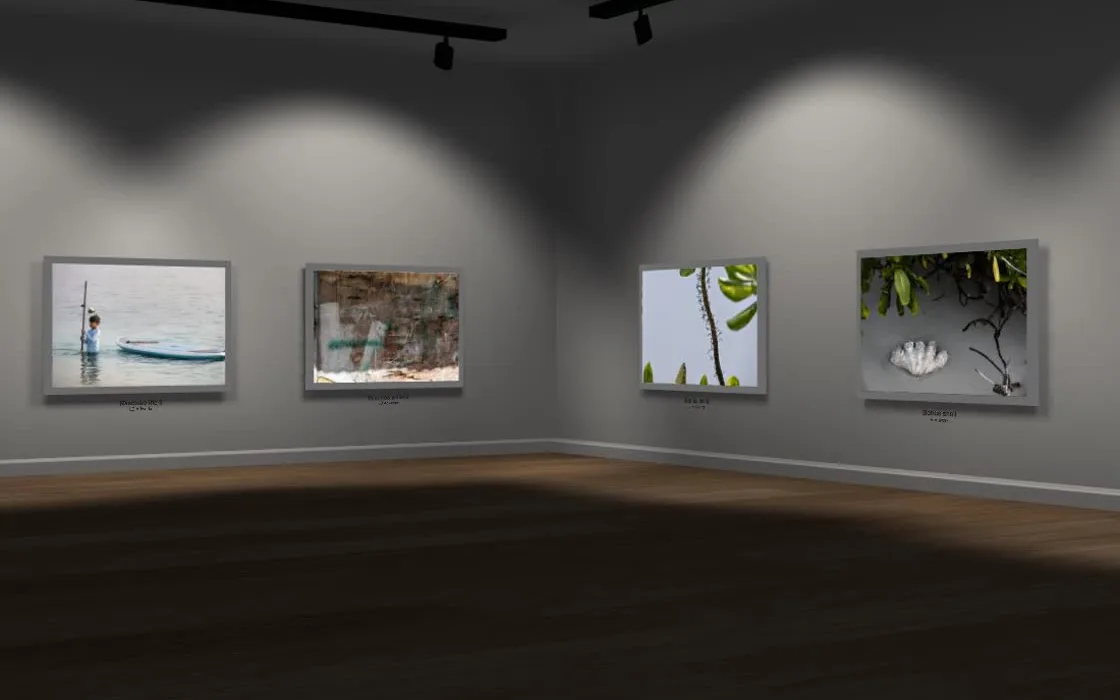
Pros: Test without login · Folders become rooms, artworks placed automatically · No artwork limit · Export a self-contained ZIP and host it anywhere · MIT licensed · Free forever if you self-host
Cons: No built-in e-commerce · No AR wall-preview mode · No VR headset support
Kunstmatrix — Mature, Institutional, Friction-Heavy
Kunstmatrix is one of the most established virtual art gallery platforms, operating since 2009 out of Germany. Real galleries and institutions use it, and the pioneering work deserves genuine respect. Performance is solid; templates render acceptably even on lower-end graphics cards.
The friction, however, is real. Images must be imported one by one, or via a CSV you manage yourself. You then build an exhibition by curating from your inventory — a workflow borrowed from physical gallery management that feels heavy for a solo artist. The free tier caps at 10 artworks and does not include a public 3D exhibition, and the template rooms feel surprisingly cramped for a medium that has no physical space constraints.
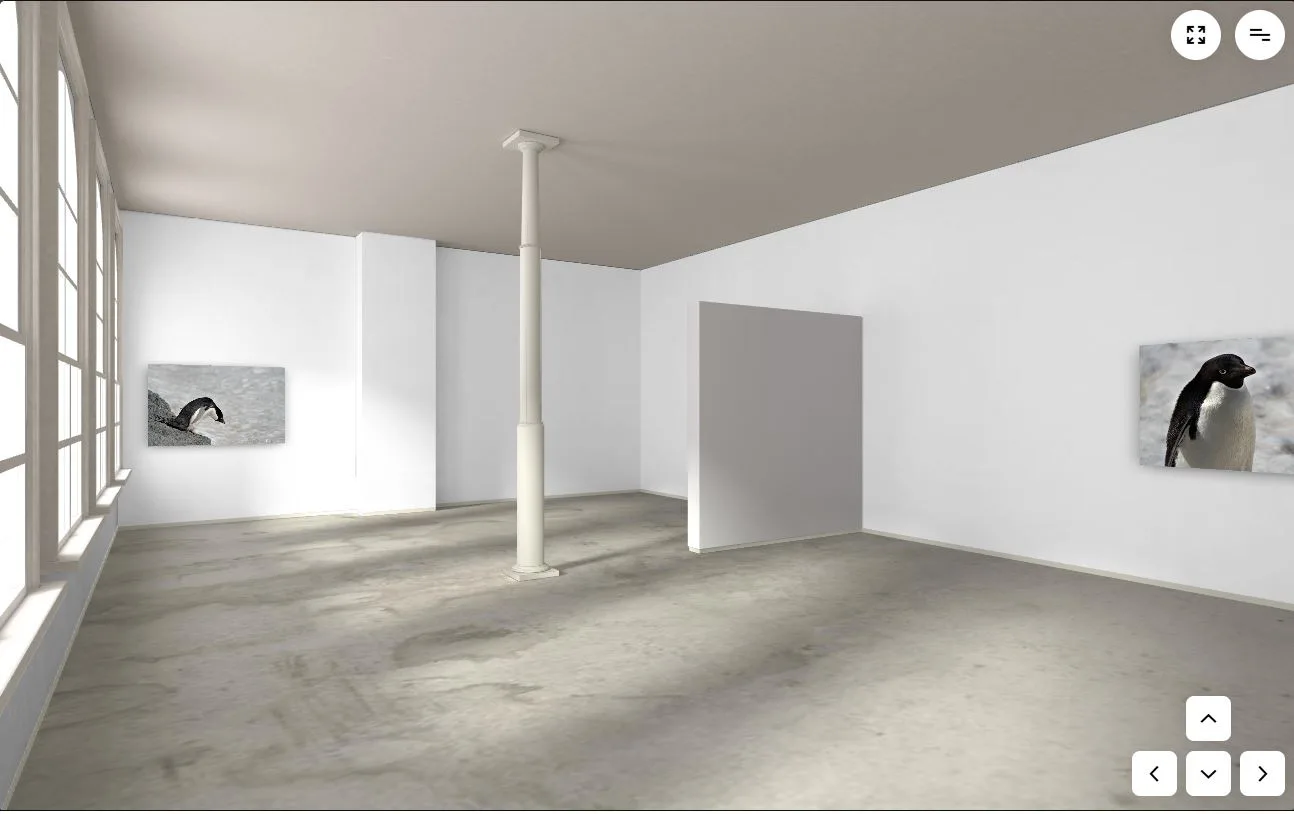
Pros: Mature platform · Institutional credibility · Basic inventory management
Cons: High-friction upload flow · Packed rooms · Only 10 artworks free · No self-hosting
Exhibbit — Pioneer With a Dated Interface
Exhibbit launched in 2008 — even before Kunstmatrix — and deserves credit for being among the first 3D virtual gallery builders. But the platform shows its age. There’s no free tier, only a 7-day trial.
Images are uploaded one by one; you’re even required to enter height before uploading. Each image spawns a wall of customisation options whether you want them or not. Artwork placement into templates is unintuitive. The resulting gallery preview is visually average and sluggish to navigate. At $100/month for 1–2 galleries, it’s the most expensive option in this roundup for the value delivered.
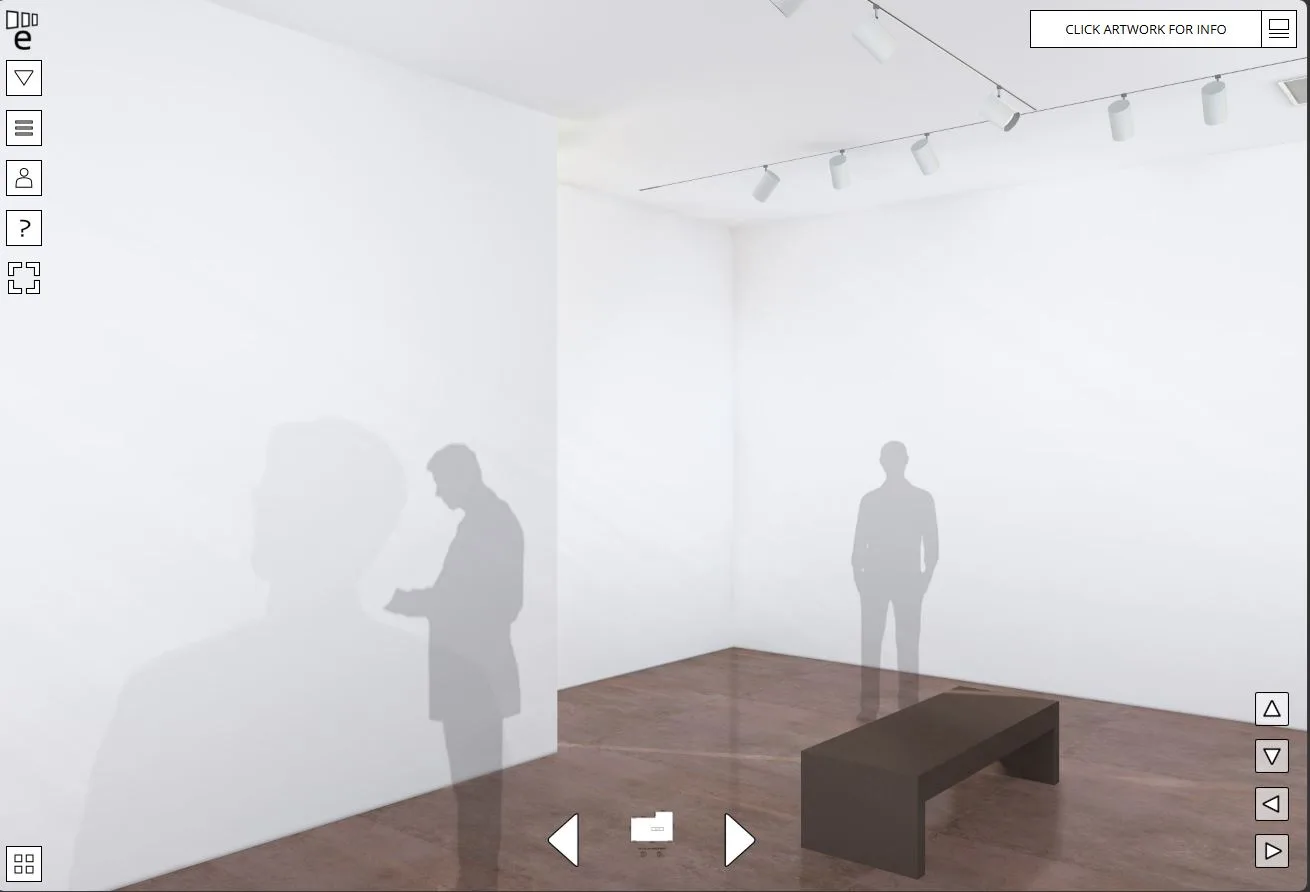
Pros: Artwork inquiry system
Cons: Poor performance · Outdated interface · $100/month starting price · Only 5 templates · No free tier
ArtPlacer — Locked Ecosystem with no free tier
ArtPlacer (New York, 2019). Templates look good. Movement in the 3D space feels oddly constrained compared to competitors, and the interface aspect ratio is an unusual choice.
No free tier; the 7-day trial requires payment information upfront — so I declined to test the full flow. At $27/month the entry price seems reasonable, but the maximum plan caps at just 80 artworks, which is limiting for working artists with large catalogues. Terms of service deserve scrutiny.
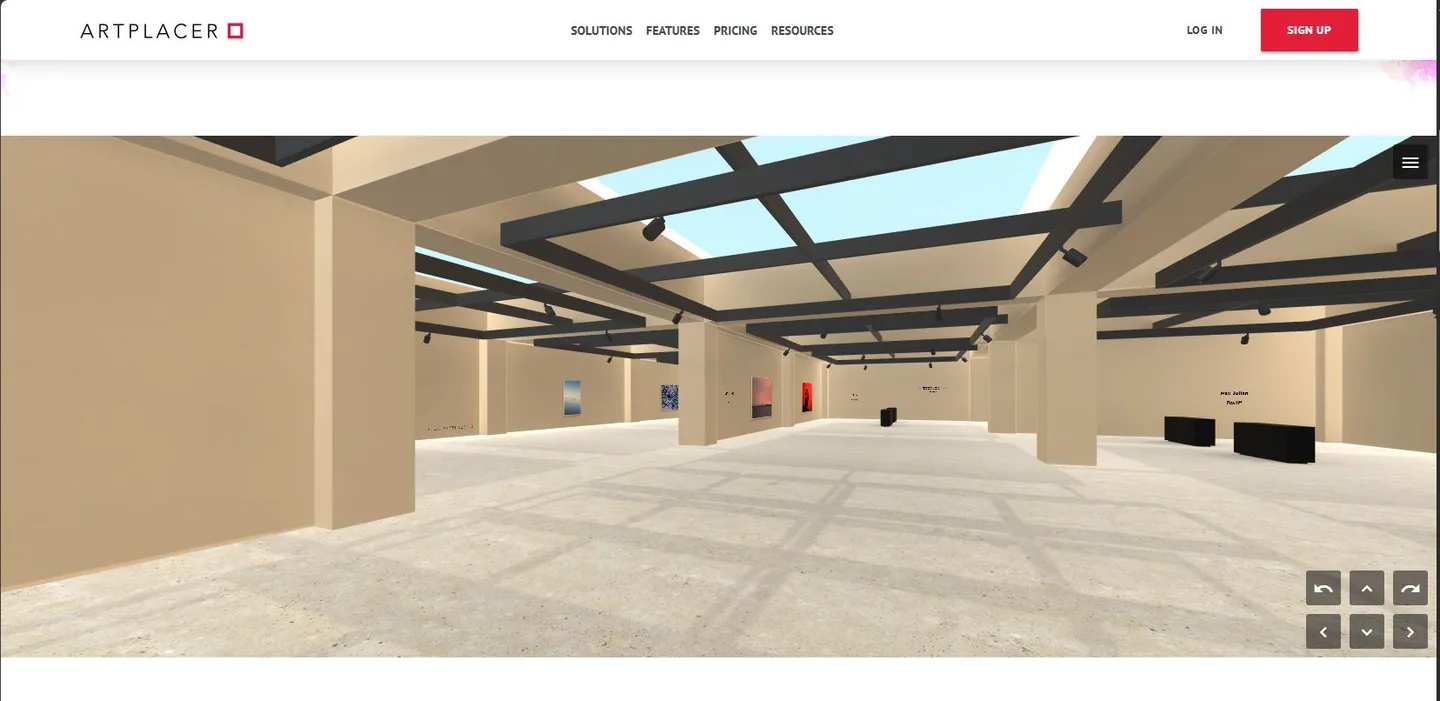
Pros: Smooth performance · Good templates
Cons: No free tier · Payment required for trial · 80 artwork cap on max plan · Proprietary lock-in
Artsteps / Metasteps — Feature-Rich, Performance-Poor
Artsteps (Greece) now sends new work to its successor, Metasteps. It claims 1 million users and offers the most customisation options of any platform reviewed — but at a significant cost. Loading times are long; the waiting screen is itself a 3D environment, which confused me repeatedly. Once inside, visual quality is attractive but performance is poor, especially on average hardware.
The free tier is generous in storage (500 MB) but galleries are only published for 2 weeks — which fundamentally undermines the idea of a permanent virtual portfolio. The creation flow has the same per-image friction as competitors, compounded by a very non-modern web interface. The user licence deserves careful reading before you commit.
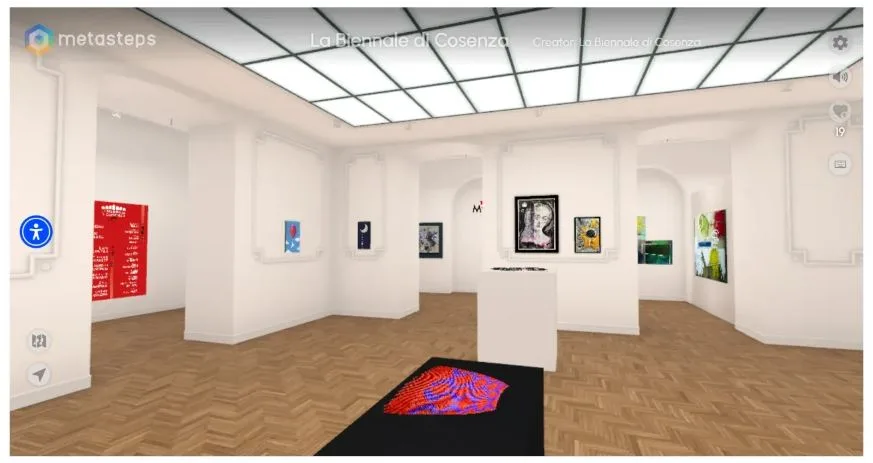
Pros: Many templates · Many artworks on paid plans · Rich customisation
Cons: Slow performance · 2-week publishing limit on free tier · Tedious interface · Licence concerns
Galeryst — Closest to OpenVGAL in Concept, Requires Adobe ID
Galeryst started as a hobby project by Michael Scherotter — similar origin to OpenVGAL. There are conceptual similarities I genuinely like: the Foyer/Wings room structure and automatic artwork placement both resemble OpenVGAL’s approach.
But there are significant differences. Login requires an Adobe ID with no alternative — a hard dependency on Adobe’s ecosystem. The visual output is rudimentary, and some customisation tasks (like adjusting texture scale) are exposed as end-user settings when they should be template defaults. The built-in shop feature has questionable real-world utility. Lightroom integration is a genuine plus for photographers deep in the Adobe stack.
Pros: Automatic artwork placement · Lightroom integration · Built-in shop
Cons: Adobe ID required · Visually basic · Primitive customisation options
Virtual Art Gallery — Smoothest Flow Among the Alternatives
Virtual Art Gallery (Muser Oy, Finland) has the smoothest creation flow of the alternatives reviewed: choose a template, upload artworks, see the result immediately — customise later. The web design feels modern and the process is genuinely approachable.
Minor issues: the autoplace algorithm occasionally errors, and movement within the gallery feels a bit stiff. Room templates skew small on the paid plans, which limits large portfolios. There is a free tier, which makes it the most accessible commercial option for testing before committing.
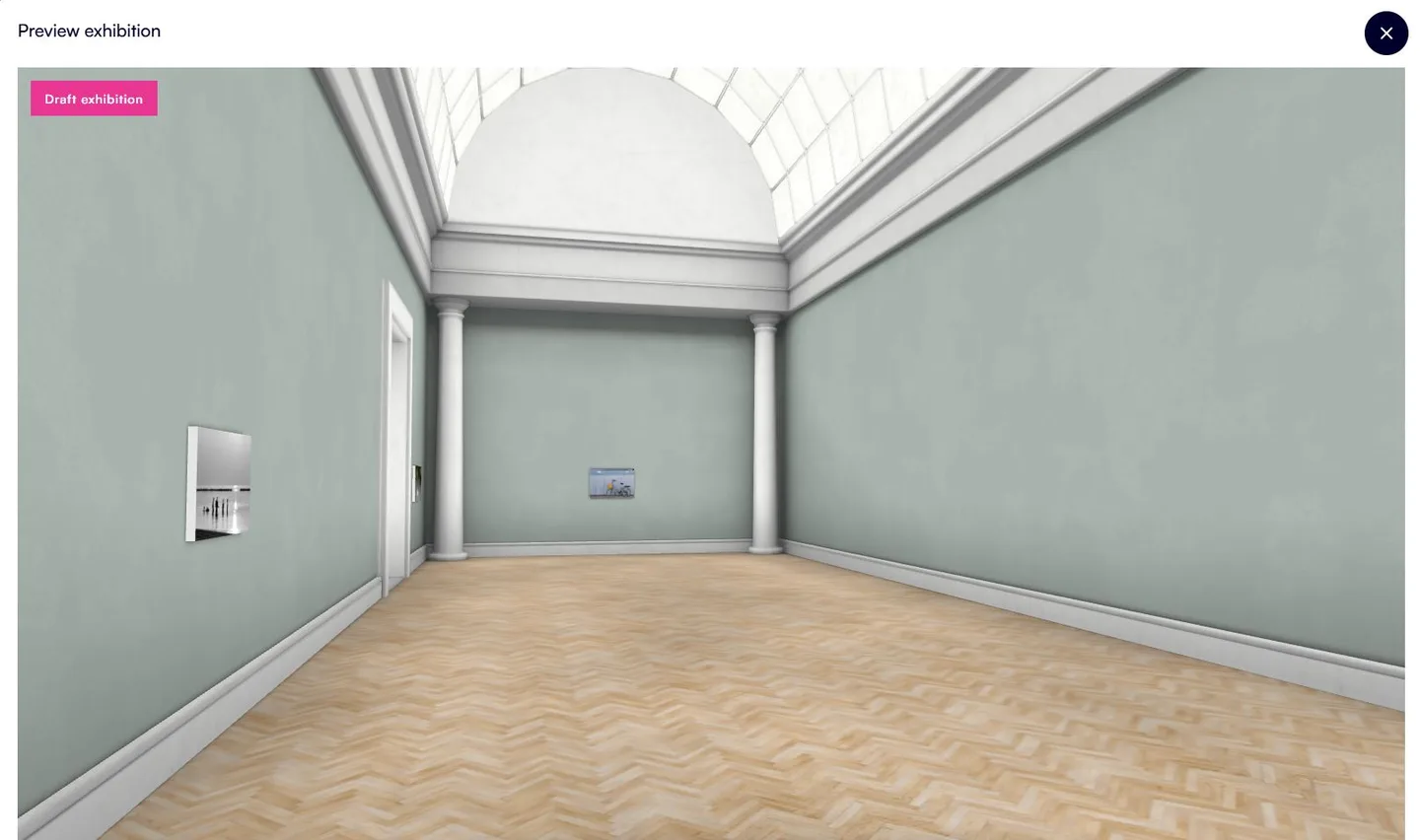
Pros: Excellent user flow · Free tier · Modern web design · Reasonable starting price
Cons: Small room templates · Awkward movement mechanics · Platform lock-in
Anasaea — Art Marketplace With Gallery Features
Anasaea (US) positions itself as an art marketplace that includes 3D virtual gallery exhibition capabilities. The free tier allows only 3 artworks and 2 templates, which makes meaningful evaluation difficult. The single-image upload flow repeats the same friction seen across the field.
From the public examples on their website, paid-tier templates look impressive and performance appears strong. The interface is relatively modern. Worth exploring if marketplace features (sales, discovery) matter as much as the gallery itself.
Pros: Good-looking paid templates · Solid performance · Marketplace integration
Cons: Very limited free tier (3 artworks) · Standard upload friction · Platform lock-in
Shapespark — Architectural-Grade Visuals, Wrong Audience
Shapespark (Poland) is a fundamentally different animal: it was built for architectural visualisation, and art is just one of many applications. For architectural-grade fidelity it is the best of any platform reviewed, with excellent performance even in complex scenes.
The tradeoff: you must download and install a desktop 3D editor, the learning curve is steep, and the Premium plan (the only one offering self-hosting on your own server) costs 260€/month. If you’re an architect who also makes art, this is compelling. If you’re an independent artist who wants a portfolio, the complexity is overkill.
Pros: Outstanding 3D visual quality · True self-hosting option · Professional 3D editor
Cons: Built for architects, not artists · Requires desktop software installation · Very steep learning curve · 260€/month for self-hosting
Others Worth Noting
A few additional platforms didn’t make the full review for various reasons:
E Virtual Gallery (Spain) shows impressive customisation in demo videos, but I was unable to create a gallery after sign-up. Offers 10 artworks free, up to 1,000 on premium plans.
Oncyber was my original inspiration for OpenVGAL, but it appears to be in transition — the parent company Cyber Meta Inc. was dissolved around end of 2024.
Spatial.io focuses on live events rather than permanent portfolio galleries — a different use case.
Artland.com was inaccessible at time of review (site down).
VR-All-Art (Switzerland) shows gallery visuals similar to ArtPlacer, but has no public sign-up — you contact them for a quote. Appears to target institutional clients.
Cura3D (Germany) — could not verify any online testing option.
Why OpenVGal Is Different: A Free, Open-Source 3D Virtual Gallery
I’m LB — photographer, generative artist, and the person who got tired of renting digital wall space that could vanish overnight.
Twenty years ago pbase.com taught me a painful lesson about platform dependency. Four years ago I decided enough was enough and started building OpenVGal — a free, open-source 3D virtual gallery generator that every artist can use without signing up, paying, or handing over ownership of their work.
Everything above reflects my honest assessment after personally testing each platform. I have genuine respect for the teams that built them — many have created impressive tools. But none solved the problem that thousands of independent artists actually face: permanent ownership without monthly rent.
If a commercial platform fits your workflow better, use it. No hard feelings.
But if the idea of losing your life’s work because a company changes pricing, gets acquired, or shuts down keeps you up at night — OpenVGAL was built for you.
What OpenVGAL Actually Delivers
- Drop folders of images → each folder becomes a gallery room automatically
- Live 3D preview with automatic artwork placement — no manual positioning
- One-click download of a complete, self-contained ZIP
- Host anywhere: Netlify, GitHub Pages, your own server, any web host
- No accounts, no subscriptions, no runtime API calls
- Fully MIT licensed — use it commercially, embed it, modify it, keep it forever
- Works with 1,000+ images — designed for real portfolios, not just 10-artwork demos
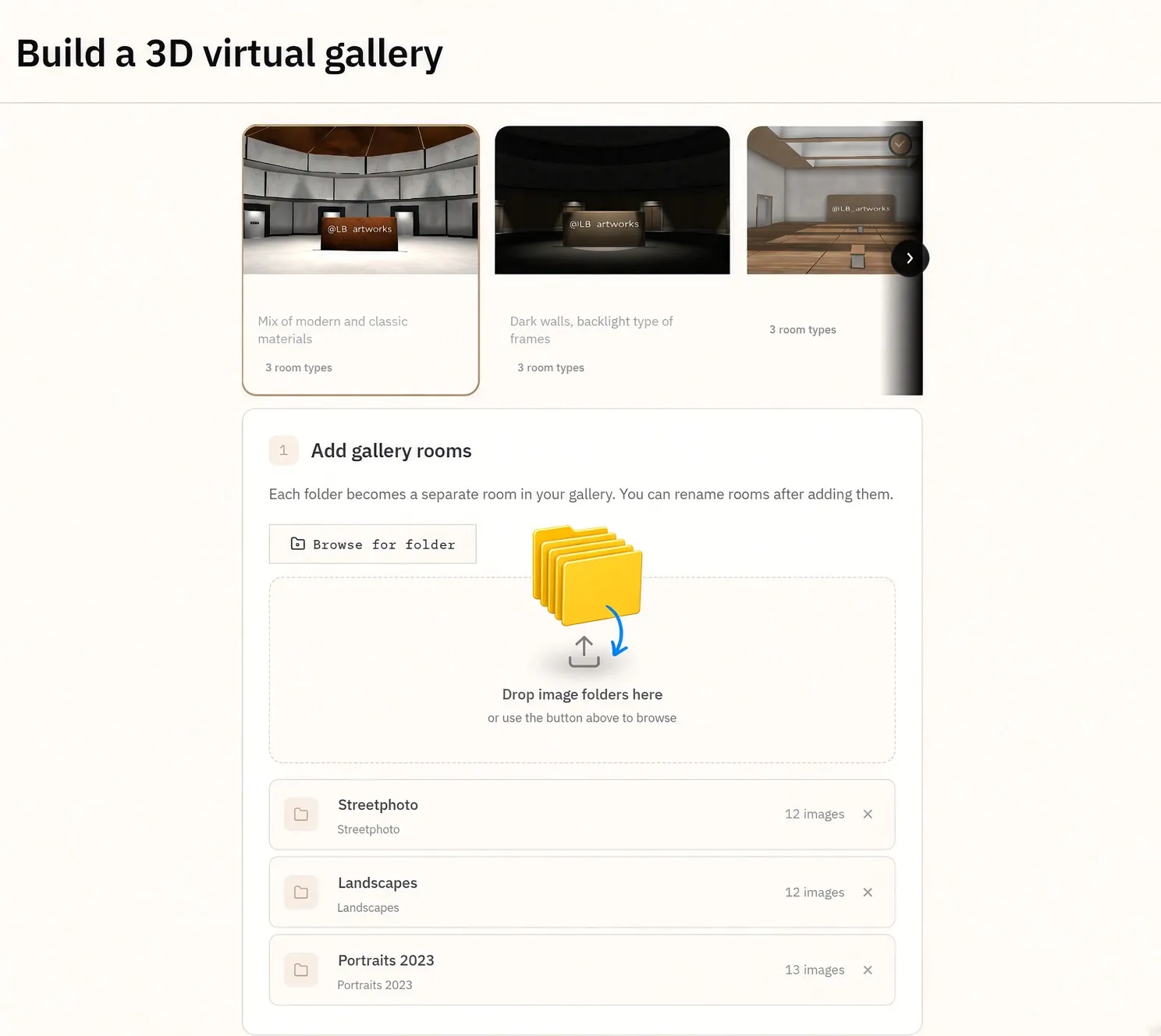
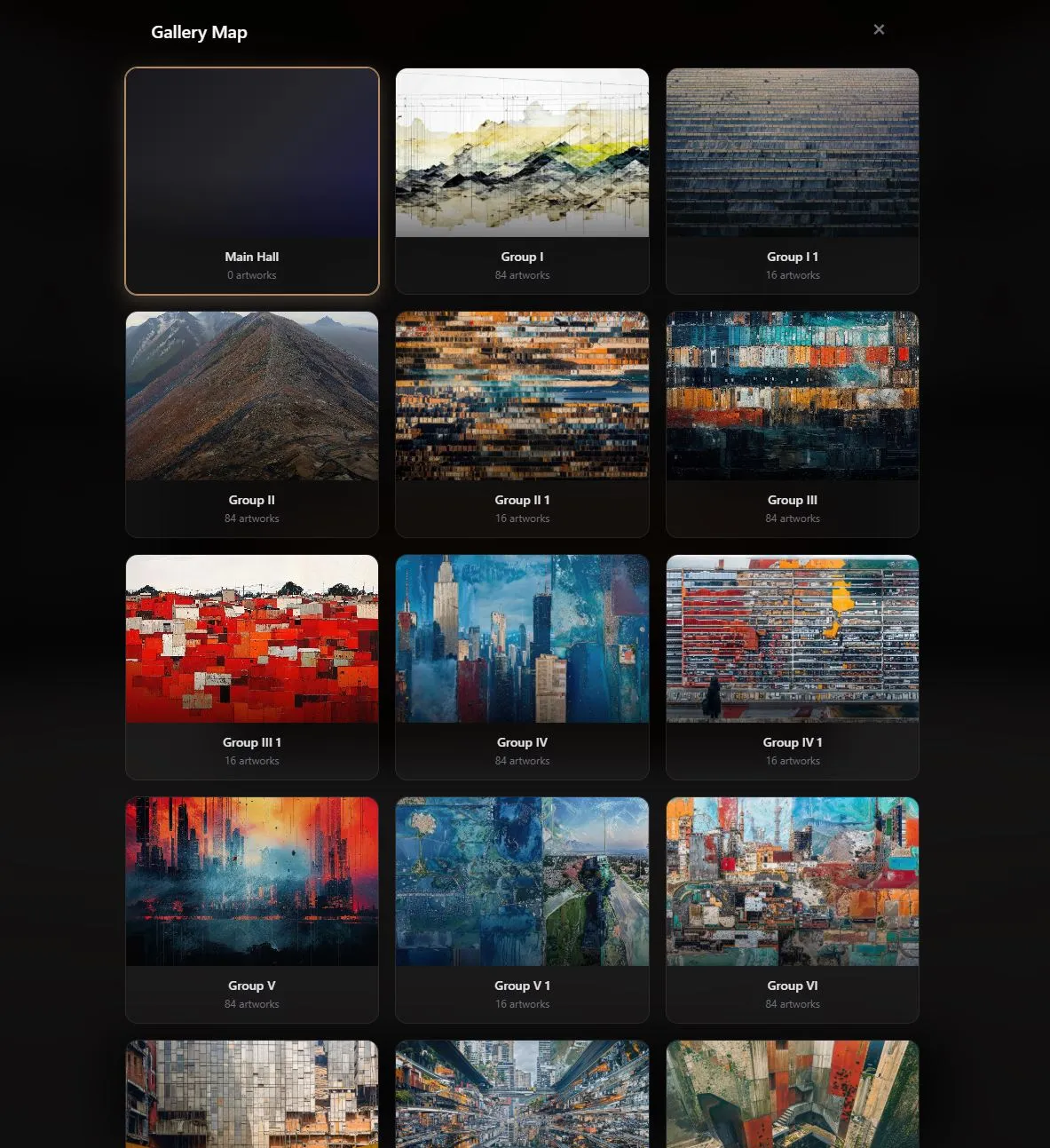
Current v3.3 adds gallery styles (Classic, Minimalist, Dark), museum-style plaques, a metadata editor, a gallery map, and template-driven lighting. See the full changelog on GitHub.
What OpenVGAL Doesn’t Do
OpenVGAL won’t replace ArtPlacer if you need a collector AR wall-preview tool. It has no built-in e-commerce, no AR mode, no VR headset support. It does one thing — 3D virtual galleries you fully own — and tries to do that exceptionally well. And the things it does — no account to try it, folders in and rooms out, no artwork cap, a copy you can host yourself — no other platform above offers all of them together.
The MIT Licence: What It Actually Means for You
The galleries you create are yours — completely. No platform owns a licence to your content. No attribution required. No restrictions on commercial use. Just clean, portable HTML + JavaScript + your images, working anywhere, forever.
Artists Deserve Galleries That Last
Physical exhibitions come down. SaaS platforms evolve, pivot, or disappear. Your work deserves better.
OpenVGAL gives you a 3D virtual art gallery that belongs to you — today, next year, and in 2035. No landlord. No surprise bills. Just your art, looking beautiful on the modern web.
Spend five minutes at openvgal.com/create. Drop a few folders and see how it feels to own the result. If you want to dig into the code or contribute, everything is on GitHub. See a complement to this article in OpenVGal site
I’d love to see what you build. Tag @lb_artworks when you launch your gallery — I repost the best ones.
If this article helped, share it with a fellow artist who’s tired of renting their digital walls.
— LB